Last Monday I carried out a quick poll on Twitter in which I asked people;
Who are your top five favourite Victorians?
I was overwhelmed with the responses from everyone, and set about putting together a league table of Twitter’s favourite men and women of the age. As the league table took shape, I discovered that a top five was impossible, as many of the front-runners shared the same number of points, and so the top five became a top thirteen, but, John Stuart Mill shouldn’t feel too bad about sitting thirteenth, and should take heart that he is really joint-fifth with none other than Arthur Conan Doyle, Benjamin Disraeli, Joseph Bazalgette and the Great Prince Albert.
For reasons of suspense, I have assembled the league here in reverse order, starting with the people who received only one vote:
1 Vote:
Toulouse Lautrec (French Artist, below)
Alexander Milne (Entrepreneur & Philanthropist)
Lord Carnarvon (Aristocrat & Financier of Egyptian excavations)
Joseph Swan (Physicist & Chemist)
Bram Stoker (Author)
John Hanning Speke (Discovered the source of the Nile)
Kenneth MacLeay (Painter of Queen Victoria's "Highlanders of Scotland" portraits)
Harriet Martineau (Journalist & Writer)
James Clerk Maxwell (Scottish physicist & mathematician)
John Herschel (Astronomer & mathematician)
William Whewell (Scientist)
James Whistler (Artist)
Angela Burdett Coutts (Philanthropist - read more here)
John Bright (Politician, coined the phrase “England is the mother of all parliaments”)
Wilkie Collins (Author)
David Octavius Hill (Artist)
JW Waterhouse (Artist)
H.G. Wells (Author)
Mary Coleridge (Author & Poet)
Emily Dickinson (American poet)
Elizabeth Siddal (Rossetti’s partner & model for Pre-Raphaelite paintings)
William Wilberforce (Politician & Philanthropist)
John Everett Millais (Artist)
Dorothea Beale (Educational reformer & former principal of Cheltenham Ladies College)
Frances Buss (Headmistress & Pioneer of women’s education)
Christopher Anderson (Theologist)
Hugh Miller (Geologist)
Thomas Henry Huxley (Biologist & Darwin supporter)
Philip Henry Gosse (Naturalist)
Helena Blavatsky (Theosophist)
Henry Thomas Buckle (Historian & Author)
James Anthony Froude (Historian & Author)
Lord Acton (Politician & Author, below)

Edward A. Freeman (Historian)
Mendelssohn (German Composer)
Augustus Pugin (Architect)
Earl of Ellesmere (I’m guessing the 2nd Earl, Politician)
John Murray (Publisher)
Thomas Hardy (Author)
Edward Elgar (British Composer)
Edward Burne-Jones (Artist)
Sir Titus Salt (manufacturer, politician & philanthropist)
William Armstrong (Industrialist)
Octavia Hill (Social reformer)
Edwin Chadwick (Social reformer)
Charles Booth (Social researcher, below)
Thomas Edison (Inventor)
Mark Twain (Author)
Edgar Allan Poe (Author & Poet, read more here)
Mary Kingsley (Writer & Explorer)
Marianne North (Naturalist & Botanical Artist)
Isabella Bird (Explorer & Writer)
Amelia Edwards (Author & Egyptologist)
Mary Gaunt (Author)
Van Gogh (Artist)
Mary Cassatt (American Painter)
Marie Curie (Physicist & Radioactivity pioneer)
Harriet Beecher Stowe (American Author & Abolitionist)
Elizabeth Barrett Browning (Poet)
Polly Nichols (Whitechapel murder Victim)
Annie Chapman (Ditto)
Liz Stride (Ditto)
Catherine Eddowes (Ditto)
Mary Jane Kelly (Ditto)
Oscar Wilde (Author & Poet)
Ellen Terry (Actress, read more here)
William Gladstone (Politician, below)
Isabella Beeton (Domestic Goddess)
Henri Giffard (Engineer)
Sir Richard Francis Burton (Geographer & Explorer)
Russell Wallace (Geographer, Explorer, Naturalist & Biologist)
Charles Babbage (Mathematician & Inventor, below)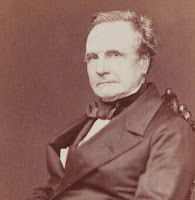
7th Earl of Shaftesbury (Politician & Leader of Factory Reform)
Michael Faraday (Chemist & Physicist)
John Snow (Physician, read more here)
William Booth (Founder of Salvation Army)
Matthew Arnold (Poet & Schools Inspector)
Friedrech Engels (German Social Scientist & Joint Father of Marxism)
Elizabeth Gaskell (Author)
Elizabeth Garrett Anderson (First woman to gain a medical qualification)
Anthony Trollope (Author)
C.L. Dodgson (Lewis Carroll – Author)
3 Votes:
Dante Gabriel Rossetti (Artist)
Christina Rossetti (Poet, Sister of the Above)
Alfred Tennyson (Poet)
Nikola Tesla (Inventor, below)
Charlotte Bronte (Author)
Florence Nightingale (Nurse & Healthcare Reformer)


His first foray into politics was in 1837, when he was elected to represent Maidstone under the Peel government. He was ridiculed after making his first speech as an MP, when he spoke on Irish Elections, but predicted to his audience; “the time will come when you will hear me”.
He was not wrong. He became Prime Minister in 1868 at the age of 64 following the resignation of Lord Derby, though Disraeli only held the post for a matter of months before Gladstone’s liberals came to power. Disraeli would go on to have another term as Prime Minister, though, when, in 1874, with Disraeli aged 70, his conservative government defeated Gladstone’s liberal party in the election.
Disraeli’s second Prime Ministerial spell lasted six years, until 1880, when his great rival Gladstone once again took over as Prime Minister. Disraeli would not take the post again, dying in 1881 of bronchitis.
The long-running battle between Disraeli and Gladstone is probably one of the greatest and most interesting Parliamentary rivalries in history, and although Gladstone became PM a record four times and has many admirers still today, many people hold Disraeli in greater affection, as did Queen Victoria herself, who was known to favour Disraeli over Gladstone due to the older man’s charm and flattery.
His crowning achievement as Prime Minister was bringing India and the Suez Canal under control of Britain. (And receiving two votes more than Gladstone in this poll.)

One of the best things about doing this poll has been carrying out snippets of research on some of the people mentioned that I knew little or nothing about, of which there were a couple. And so, after some enlightenment, we move onto the eminent peoples who proudly came....


As well as his art, Morris wrote poetry, and published a collection entitled ‘The Defence of Guenevere and Other Poems’ in 1858.
As ‘The Brotherhood’ expanded to include architect Phillip Webb, artist Ford Maddox Brown, mathematician Charles Faulkner, and engineer P.P Marshall, they formed ‘Morris, Marshall, Faulkner & Co.’ "Fine Art Workmen in Painting, Carving, Furniture and the Metals," in 1861, a furnishing and decorative arts manufacturer and retailer which created and sold medieval-inspired home-ware. They displayed their work at the 1862 Great Exhibition (read about the 1862 Exhibition here) and subsequently went on to huge success, changing the taste of the entore nation when it came to home décor. Their commissions included the Armoury and Tapestry Room in St. James's Palace and the Dining Room in the Victoria and Albert Museum


The other surprising thing on the list was the number of females who appear; thirty two out of one-hundred-and-three Victorians nominated were women; a notable feat considering the challenges before them during the period.
I should also note that one of the people nominated did not make it onto the list, since they were fictional, but in the interest of fairness I shall mention here that Charles Pooter, of the Grossmith brothers’ comedic novel ‘Diary of a Nobody’ was also nominated.
Finally, a great big thank-you to everyone who Tweeted with nominations, opinions and kind words, it has been a fun post to write and I may conduct another poll very soon!
Mendelssohn (German Composer)
Augustus Pugin (Architect)
Earl of Ellesmere (I’m guessing the 2nd Earl, Politician)
John Murray (Publisher)
Thomas Hardy (Author)
Edward Elgar (British Composer)
Edward Burne-Jones (Artist)
Sir Titus Salt (manufacturer, politician & philanthropist)
William Armstrong (Industrialist)
Octavia Hill (Social reformer)
Edwin Chadwick (Social reformer)
Charles Booth (Social researcher, below)

Thomas Edison (Inventor)
Mark Twain (Author)
Edgar Allan Poe (Author & Poet, read more here)
Mary Kingsley (Writer & Explorer)
Marianne North (Naturalist & Botanical Artist)
Isabella Bird (Explorer & Writer)
Amelia Edwards (Author & Egyptologist)
Mary Gaunt (Author)
Van Gogh (Artist)
Mary Cassatt (American Painter)
Marie Curie (Physicist & Radioactivity pioneer)
Harriet Beecher Stowe (American Author & Abolitionist)
Elizabeth Barrett Browning (Poet)
Polly Nichols (Whitechapel murder Victim)
Annie Chapman (Ditto)
Liz Stride (Ditto)
Catherine Eddowes (Ditto)
Mary Jane Kelly (Ditto)
Now the Victorians who received two votes:
2 Votes:
Oscar Wilde (Author & Poet)
Ellen Terry (Actress, read more here)
William Gladstone (Politician, below)

Isabella Beeton (Domestic Goddess)
Henri Giffard (Engineer)
Sir Richard Francis Burton (Geographer & Explorer)
Russell Wallace (Geographer, Explorer, Naturalist & Biologist)
Charles Babbage (Mathematician & Inventor, below)

Michael Faraday (Chemist & Physicist)
John Snow (Physician, read more here)
William Booth (Founder of Salvation Army)
Matthew Arnold (Poet & Schools Inspector)
Friedrech Engels (German Social Scientist & Joint Father of Marxism)
Elizabeth Gaskell (Author)
Elizabeth Garrett Anderson (First woman to gain a medical qualification)
Anthony Trollope (Author)
C.L. Dodgson (Lewis Carroll – Author)
Receiving three votes each were:
Christina Rossetti (Poet, Sister of the Above)
Alfred Tennyson (Poet)
Nikola Tesla (Inventor, below)

Charlotte Bronte (Author)
Florence Nightingale (Nurse & Healthcare Reformer)
Now onto the difficult part, the top five (which is actually a top fourteen)
Joint Fifth: (Four votes each)
Joseph Bazalgette:
(1819 – 1891)

He may only be my second favourite engineer of the Victorian age, but his achievement is certainly second to none in my eyes. The design, science and mathematics behind London
Bazalgette;s sewers and the gardens and embankments that came with them not only made London
Victoria and Albert embankments were both designed by him (to cover low-level sewers) as was the Chelsea embankment. If you need proof, look at a picture of Victoria Embankment, and then look at a picture of the site prior to its building.
Prince Albert:
(1819 – 1861)

Cited as the father of the modern monarchy, Albert was initially not liked by the British public who didn’t warm to the Queen’s foreign husband, but he soon began to turn the tide of opinion through the improvements he made to various areas of society. Soon after marrying Victoria, who was not as well educated as him, he began to help her with the governmental paperwork she had to do. It is also down to Albert that the monarch has no political preferences, as he deemed it right that the Royal Family should be ‘above’ politics. Albert did a great deal of campaigning for improvements to the educational system and reformed the university curriculum to incorporate more modern subjects, rather than traditional subjects such as maths and history. As well as this, he campaigned for better schooling for less well-off children, but, as a lover of the arts and sciences, his finest achievement was the Great Exhibition of 1851 which showcased the best and most ground-breaking art, industry, science and technology from all over the world. The exhibition was a massive success and ushered in an era of industrial and scientific change.
In December 1861, Albert Died at the age of 42. Queen Victoria famously mourned him for the rest of her life, withdrawing from public duties and unintentionally undoing some of Albert’s hard work in turning the monarchy into a popular institution.
Arthur Conan Doyle:
(1859 – 1930)

Author of the still-popular Sherlock Holmes novels, Doyle’s other achievements are often overshadowed by the great Baker Street
I blogged about those in May, read it here: here
Mary Seacole:
(1805 – 1881)

She may have been overlooked by Florence Nightingale when she chose thirty-eight nurses to take to the Crimea, but Mary managed to receive one vote more than the vaunted Miss Nightingale in my poll, and secure a place in the top 5. This surprised me, because Florence Nightingale has been a popular figure since she died, and her popularity has remained steady, yet Mary Seacole was largely forgotten for almost a century, but in recent decades her achievements have brought her back into the limelight.
She is most famous for her work helping soldiers in the Crimean war, which, despite being turned down by Nightingale, she still attended, getting there herself by raising money for the journey.
During the war, Mary treated sick and wounded soldiers from both sides, often placing herself in danger to do so.
130 years after her death, there are plans to erect a memorial statue to Mary in the grounds of St Thomas’s church in London.
Benjamin Disraeli:
(1804 – 1881)

When I saw Disraeli come in the top five I was not hugely surprised, and I think his place here is a sign of how different politics is today, compared with the Victorian era. I know it is impossible, but if we were to travel over a century into the future, I wonder which of today’s politicians would appear in similar lists? Certainly I would suggest none since the end of Thatcher.
As well as being Prime Minister, Disraeli had many other interests outside of politics, including writing, and he was a successful author, having published seventeen works of fiction, and, not unlike Dickens, leaving an unfinished novel, ‘Falconet’ behind after his death.
His debut 1826 novel, ‘Vivian Grey’ was written anonymously, and is the story of the title character’s attempted progression into the world of politics. Disraeli apparently based the character of Vivien Grey on a former business partner – hence his anonymous authorship – but when his identity was discovered Disraeli was somewhat vilified by certain circles.
He was not wrong. He became Prime Minister in 1868 at the age of 64 following the resignation of Lord Derby, though Disraeli only held the post for a matter of months before Gladstone’s liberals came to power. Disraeli would go on to have another term as Prime Minister, though, when, in 1874, with Disraeli aged 70, his conservative government defeated Gladstone’s liberal party in the election.
Disraeli’s second Prime Ministerial spell lasted six years, until 1880, when his great rival Gladstone once again took over as Prime Minister. Disraeli would not take the post again, dying in 1881 of bronchitis.
The long-running battle between Disraeli and Gladstone is probably one of the greatest and most interesting Parliamentary rivalries in history, and although Gladstone became PM a record four times and has many admirers still today, many people hold Disraeli in greater affection, as did Queen Victoria herself, who was known to favour Disraeli over Gladstone due to the older man’s charm and flattery.
His crowning achievement as Prime Minister was bringing India and the Suez Canal under control of Britain. (And receiving two votes more than Gladstone in this poll.)
John Stuart Mill:
(1806 – 1873)

I have to admit, Mill was someone I knew virtually nothing about prior to carrying out my poll, and so I was reasonably surprised to see his name in the top five. According to the eminent Wikipedia, John Stuart Mill was:
“…a British philosopher, economist and civil servant. An influential contributor to social theory, political theory, and political economy, his conception of liberty justified the freedom of the individual in opposition to unlimited state control.
He was a proponent of utilitarianism, an ethical theory developed by Jeremy Bentham. Hoping to remedy the problems found in an inductive approach to science, such as confirmation bias, he clearly set forth the premises of falsification as the key component in the scientific method. Mill was also a Member of Parliament and an important figure in liberal political philosophy.”
He was a proponent of utilitarianism, an ethical theory developed by Jeremy Bentham. Hoping to remedy the problems found in an inductive approach to science, such as confirmation bias, he clearly set forth the premises of falsification as the key component in the scientific method. Mill was also a Member of Parliament and an important figure in liberal political philosophy.”
One of the best things about doing this poll has been carrying out snippets of research on some of the people mentioned that I knew little or nothing about, of which there were a couple. And so, after some enlightenment, we move onto the eminent peoples who proudly came....
Joint Fourth: (Five votes each)
Queen Victoria:
(1819 – 1901)

Figurehead of the greatest era ever known and Britain’s longest serving monarch ever, having been Queen for a little over sixty three and a half years from 1837 until her death in January 1901.
Read about the death of Victoria and the end of the Victorian era here
Karl Marx:
(1818 – 1883)

The co-father of Marxism (along with the earlier-mentioned Friedrech Engels) Karl Marx is most famed for the political manuscript; ‘The Communist Manifesto’ written with Engels in 1847.
Marx was a strong advocate of socialism, and the manifesto features his idea that the current (in 1847) capitalist society would eventually be replaced by socialism, and then eventually communism. Communism was a society with no states or governments, in which the whole world lives as a ‘commune’. There was to be no money, and therefore no buying or selling, but people would work for free for the common good of society, and anything they needed, such as food and shelter, would be provided for them for free.
With no governments or geographical or political boundaries, war would naturally cease.
Obviously Marx and Engels never saw this come to fruition, but ‘The Communist Manifesto’ is still a popular and relevant document today, and more widely read than when it was initially released.
Karl Marx also appeared in Peter Ackroyd’s excellent novel, ‘Dan Leno and the Limehouse Golem’ which comes highly recommended.
William Morris:
(1834 – 1896)

Textile designer, artist, poet, writer, socialist, illustrator, medievalist, father of the modern fantasy novel and friend to the Pre-Raphaelites, Morris certainly deserves a place on the list.
Despite his clearly busy schedule, Morris is best known for his arts and crafts work, and particularly wallpaper, the patterns of which he printed using the ancient metho of carved wooden blocks rather than the more common rollers. It was at Marborough and Exeter College in Oxford that he met Edward Burne-Jones and Dante Gabriel Rossetti. The three artists formed ‘The Brotherhood’ and, inspired and influenced by the writings of John Ruskin, the eminent art critic, created pieces of work based on medieval history, myths and rituals. As well as his art, Morris wrote poetry, and published a collection entitled ‘The Defence of Guenevere and Other Poems’ in 1858.
As ‘The Brotherhood’ expanded to include architect Phillip Webb, artist Ford Maddox Brown, mathematician Charles Faulkner, and engineer P.P Marshall, they formed ‘Morris, Marshall, Faulkner & Co.’ "Fine Art Workmen in Painting, Carving, Furniture and the Metals," in 1861, a furnishing and decorative arts manufacturer and retailer which created and sold medieval-inspired home-ware. They displayed their work at the 1862 Great Exhibition (read about the 1862 Exhibition here) and subsequently went on to huge success, changing the taste of the entore nation when it came to home décor. Their commissions included the Armoury and Tapestry Room in St. James's Palace and the Dining Room in the Victoria and Albert Museum
Isambard Kingdom Brunel:
(1806 – 1859)

One of my favourite Victorians and, in my opinion, the greatest engineering genius the world has, and will, ever see for his ship-building alone, but he also designed bridges, railway lines and tunnels.
When I’m asked what I would most like to do if I could step inside a time machine, my initial answer is always to go to the opening day of the 1851 Great Exhibition in the Crystal Palace, but a close second would be to visit the Millwall docks in London in 1858 and see Brunel’s Great Eastern.
The Great Eastern was, at the time, the biggest ship the world had ever seen, and at a time when the world was making the transition from sail to steam, she was the most advanced, too.
The Great Eastern was designed for long-haul trips to Australia, where there was a gold-boom at the time, but with it being so far from Britain, to get there by ship required stopping to refuel with coal. Brunel’s idea was simple; make the ship big enough to carry the all the coal it needed on board to get to Australia without needing to stop. The audacity was typical of Brunel. In the end, though, when it came to the day of the launch, it all went wrong. The Great Eastern was SO big that it had to be launched into the Thames sideways as it was almost as long as the river was wide. Two separate launch ramps were constructed, one at each end of the ship, but the ramps were poorly constructed, and one sat lower than the other, causing the ship to turn lop-sided and get stuck.
Brunel’s first taste of a large engineering project came when he worked with his father, Marc Brunel, on the difficult Thames Tunnel project, which you can read more about here.
Brunel’s other notable engineering feats were the Clifton suspension bridge that crosses the River Avon which took over thirty years to complete, and the two groundbreaking ships the Great Western, the first steam powered ship to cross the Atlantic, and the Great Britain, the world’s first iron-hulled, screw-propeller-driven, steam-powered passenger liner.
On a disgracefully shallow point, he also looks ‘cool’.
Joint Third: (Seven votes each)
George Eliot:
(1819 – 1880)

Real name Mary Anne Evans – though not to be confused with Disraeli’s wife of the same name – George Eliot is the highest placed woman on the list. She changed her name to apparently avoid the period’s stereotype that women authors penned only wishy-washy or romantic novels, and so adopted a male-sounding name to ensure an unprejudiced reception to her work.
She wrote seven novels throughout her career, with ‘Middlemarch’ and ‘Silas Marner’ probably being her best-known work. Her books were set in rural England and explored feelings of social outcasts whose lack of proximity to the city, and possibly the industrial world, made them less relevant.
George Eliot grew up in the Midlands, but at the age of thirty-one moved to London where she both lived, and found employment with, John Chapman, the radical publisher who gave her a job as assistant editor of his left-wing journal ‘The Westminster Review’. Such a position was uncommon for a woman to hold at the time.
In her position she was able to meet fellow literary-minded people, including philosopher George Henry Lewes. Lewes was married with three children, but despite this, Eliot moved in which him and formed a relationship which caused somewhat of a scandal as, unlike many other literary figures of the time, they publicly admitted their affair, and did not keep it secret.
George Eliot died on 22nd December 1880 at the age of sixty0one, and is buried in Highgate cemetery in LondonCharles Darwin:
(1809 – 1882)

Darwin is probably one of the most important people on the list in terms of changing the way we think about the world, and despite that, he is one of the Victorians into whose life I have never really peeked. I know all about his ‘On the Origin of Species’, though, and can’t imagine what it must have been like to read – or hear – that theory for the first time.
The idea was initially planted in Darwin’s mind whilst he was on board HMS Beagle on a five-year scientific expedition. On the ship, Darwin read the book ‘Principles of Geology’ by geologist, lawyer and friend of Darwin, Charles Lyell. In the book, Lyell claimed that fossils were evidence of creatures that had lived thousands – or maybe even millions – of years ago.
This sparked a thought in Darwin’s mind, which was fuelled on the Galapagos Islands when he noted that each island was populated by finches, which were all slightly different from each other. The birds had evolved to live in their specific environments.
Upon returning to England in 1836, Darwin set to work on his theories. It was not until 1859 when Darwin published ‘On the origin of Species by Means of Natural Selection’ and caused a bit of a storm in doing so. The church in particular attacked the theories, being – as was almost the entire population – of the opinion that man had been made by God. Darwin’s theory placed man as simply an animal that had evolved over a long period of time to become the most successful animal on the planet. This revolutionary idea caused outrage, but it is testament to the genius of Darwin, and the strength of his research and work, that over time, his theory has supplanted that of the Church’s as the accepted origin of different species’ on the planet.
Second Place: (Eight votes)
John Ruskin:
(1819 – 1900)

A philanthropist, art critic and patron, Ruskin has already been mentioned in this list due to his influence on William Morris and ‘The Brotherhood’, but they were not the only ones to receive a helping hand from Ruskin.
The great romantic landscape painter JMW Turner was a relatively obscure artist until he met Ruskin, who revived Turner’s career with his 1843 book, ‘Modern painters I’ in which he championed his friend. He would go on to release a second volume, ‘Modern Painters II’ in 1846, in which he praised the Pre-Raphaelites.
In the 1850’s Ruskin became interested in politics and an advocate of socialism, and when he became a wealthy man following the death of his father in 1864, his socialist beliefs led him to give away much of the money, with the principle benefactors being the St Georges Guild, the Whitelands College and the John Ruskin School. The St Georges Guild had been founded by Ruskin himself in 1870, and he used the charity to put forward his ideas about a socialist society. Prior to his death in 1900 Ruskin had retired to the Lake District and become all but a recluse.
First Place: (Thirteen votes)
Charles Dickens:
(1812 – 1870)

No real surprise here, Dickens finished well clear of all the opposition, and rightly so, with next year being the bi-centenery of his birth, which I find a little strange. I wrote about his 199th birthday earlier this year here but two hundred years seems like such a long time, and although he was born a quarter of a century before the Victorian era began, he is the quintessential Victorian, and for his birth to have been two hundred years ago brings into sharp focus the fact that the Victorian era slips further and further into the foggy, ever-darkening and murky past with every year that passes. In 1982, it was 81 years since the death of Queen Victoria, which put the event within living memory. There was a strong chance that that pensioner you bumped into on your way to the cinema to see E.T was a Victorian once, but that chance has now passed, and Victoria’s death gets ever further away – 111 years next year.
There is not a great deal to be said about Dickens, although I was thrilled that when I wrote about the train crash he was involved in, that a few people contacted me and said that they had no idea that it had ever happened, and so I was delighted to have opened up a tiny slice of Dickens’ life to people. You can read my article here if you so wish.
Just a few points about the poll, which was, of course, by no means definitive, and took place roughly between 1p.m on Monday 28th November and finished at around 9a.m the following day. There were a few surprises in it, for me.
Firstly, the notable exceptions; people such as Robert Louis Stevenson, Henry Mayhew, George Gissing, Henry Irving, Marie Lloyd, Julia Margaret Cameron and others who didn’t appear when I felt sure they would. I have already written of Julia Margaret Cameron and Marie Lloyd, but I think Gissing is an interesting character, and I may honour him with an article all of his own soon, other nominees that achieved surprising results were Poe, who received only one vote, Christina Rossetti, who achieved the same number of votes as her brother Dante, and Ruskin, who I did not expect to be anywhere near the top of the list
I should also note that one of the people nominated did not make it onto the list, since they were fictional, but in the interest of fairness I shall mention here that Charles Pooter, of the Grossmith brothers’ comedic novel ‘Diary of a Nobody’ was also nominated.
Finally, a great big thank-you to everyone who Tweeted with nominations, opinions and kind words, it has been a fun post to write and I may conduct another poll very soon!


